Virtual Highland Tea with Diana Gabaldon

Fan of the Outlander book series? Join Diana Gabaldon and the Northern Celtic Heritage Society for virtual tea on Saturday, October 3rd from 2 PM – 3:30 PM MST. All proceeds will benefit the Northern Arizona Celtic Heritage Society’s scholarship program. To date over $120,000 has been given to individuals and groups within the society to promote, present, and preserve Celtic heritage and culture.

View more details here.

Scots’ Charitable Society / Woman’s Auxiliary Scholarship Awards

In May of 2021, the joint Scholarship Committee of the Scots’ Charitable Society and the Woman’s Auxiliary concluded their review of candidates for undergraduate scholarships for the academic year 2021 – 2022.  We are pleased to announce that scholarships were awarded to 32 candidates who submitted their completed applications and attended (via Zoom) interviews with the Committee.   The total amount given by the two organizations was $93,000.  Normally, these awards would be presented at our annual awards ceremony, but unfortunately that ceremony had to be cancelled this year due to the COVID Pandemic. Still, we want to publicly honor those students who have demonstrated scholarship, writing ability, and community service and to wish them well in their future studies. 

In addition to the core scholarships, the committee awarded a number of special, privately-funded awards in specific fields:  The MacPherson Award for an engineering student, the Lockhart Award for a student athlete, the McCall-Nichol Award for the best essay, the MacLeod Award for a student in the creative or performing arts, and the Dennis Campbell Award. We are proud to be able to support these students from schools as near as the University of Massachusetts and as far away as Edinburgh University.

Founded in 1657, the Scots’ Charitable Society is the oldest secular charitable organization in the Western Hemisphere, and was originally charged with providing aid to fellow Scots in the Massachusetts Bay Colony who were indigent or in poor health. As the social safety net expanded, the number of such needy Scots and descendants of Scots declined, and the Society changed its primary focus and in 1942 began providing undergraduate scholarships to students of Scottish descent living in the six New England states. 

The Woman’s Auxiliary Board of the Scots’ Charitable Society was founded in 1876 to aid in the work of the Scots’ Charitable Society.  Originally, its members directed the domestic affairs of the Scots’ Temporary Home located on Camden Street in Boston.  The home was established “for the purpose of giving shelter to our needy countrymen, who may be either in distress or perplexity.  Where they may remain for a short time before proceeding on their journey or obtaining situations here.” It is noteworthy that in 1882, the Superintendent of the home was John Quincy Adams II with assistance from his wife, Frances. Like the Scots’ Charitable Society, the organization focused on relief given to women and children of Scottish descent in the Commonwealth of Massachusetts; but now the Woman’s Auxiliary provides scholarships to students of Scottish descent in the six New England states.

Both organizations welcome new members intent on continuing the tradition of Scots helping Scots.

Application forms for the 2023 – 2024 school year will be posted on the Society’s web site, https://scots-charitable.org in January, 2023.

National Burger Day Competition Featuring Boston’s The Haven and Outlander’s Sam Heughan

In celebration of National Burger Day and to benefit Frontline Foods, The Haven’s Jason Waddleton has teamed with Outlander’s Sam Heughan to create the Jacobite burger for The Burger Showdown. The burger with the most votes and orders will be deemed the winner.

Eager to give the Jacobite burger a try? It is only available via UberEats!

SCS Member Lifting Spirits of Local Community

Scots’ Charitable Society member, Tom Childs, has been providing some musical relief to lift spirits in his community.

Every night Tom plays his bagpipes across the Androscoggin River pedestrian bridge. Thank you, Tom!

Check out the coverage here and here.

Scottish Participation at the Battles of Lexington and Concord

April 19, 2020 will mark the 245th Anniversary of the start of the American Revolutionary War.  

The battles of Lexington and Concord which triggered the War of Independence and was a brewing response to the Boston Massacre, taxation without representation, and other hardships such as the Sugar Act, Stamp Act and Townshend Acts imposed by Great Britain. These events generated fierce resentment in the eyes of the colonists. 

The “story” behind the story.  

More than a century before the American Revolution, the English Civil War raged from 1642 -1651. The final battles began in 1650 Charles (Stewart) II sent his Royalist army led by David Leslie to invade England comprised mostly of Scottish highlanders determined to regain the throne. In a disastrous campaign Leslie and his army were defeated by Oliver Cromwell’s Covenanter army at the Battles of Dunbar, Scotland and Worcester, England.  Ultimately, the losses forced Charles II to escape to the continent and English Civil War had ended. 

As a result of this failed campaign 15,000 Scots were taken prisoner where many died in captivity.  Cromwell deported 470 Scottish prisoners as indentured servants to Boston (arriving in Charlestown and Lynn MA). Upon arrival, the majority of these were sent to work as laborers at the Saugus and Braintree Ironworks and a smaller contingent was sent to work at the sawmills in Oyster River New Hampshire, Kittery and Berwick Maine.

In January 1657, 28 Scots who had fulfilled their time as indentured servants came together to form the Scots Charitable Society.  Their purpose, to raise funds to help release fellow former Scottish prisoners of war from servitude and to provide charitable support for Scottish families. 

In the years that followed, the descendants of the Scottish prisoners grew, prospered and merged into colonial society. The Scots played a prominent role in defending the colonies against marauding Indians and fought the Indians in King Philip’s War.  During the French & Indian War (1754-1763) which pitted the colonies of British America against those of New France, Scots allied with the British in defense of the colonies. Then, fought against the British in the Revolutionary War.

On April 18, 1775, one day before the outbreak of the battle on the Lexington Common, a meeting was held at Munroe Tavern, a locally gathering place for colonials, owned by William Munroe, an Orderly Sergeant serving under Capt. John Parker, and a great grandson of the original William Monroe who was a transported prisoner of war after his capture at the Battle of Worcester.

In the predawn hours of April 19, 1775, Capt. Parker assembled his militia in response to the news General Gage had dispatched 800 British Regulars to march toward Lexington on their way to Concord to seize a large stockpile of gunpowder and ammunition. As the morning mist gave way to the light of dawn, 77 minutemen bravely stood facing well-trained British soldiers on the Lexington common.  Among these minutemen were 32 patriots of Scottish descent. Along with William Munroe, others may have also been the grandsons and great grandsons of the Scottish prisoners of war taken a century earlier at the Battles of Dunbar and Worcester.

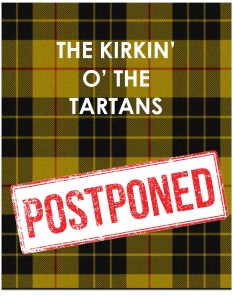
Kirkin’ O’ The Tartans Postponed

Due to COVID-19, the Kirkin’ O’ The Tartans has been postponed. Stay tuned and until then, please stay healthy and safe!

The Scottish Origins of Bobby Orr

Robert Gordon Orr, born in Perry Sound, Ontario, is widely acknowledged as one of the greatest hockey players of all time.  Orr’s speed, scoring and playmaking skills revolutionized the position of defensemen.  He played for the NHL for 12 seasons, ten of them with Bruins.  He was inducted into NHL Hall of Fame in 1979. He is remembered by most Bruins fans for the acrobatic game winning goal he scored in overtime of the 1970 Stanley Cup Finals that brought the championship back to Boston after a 29 year hiatus.

The name Orr is a sept or division of the Campbell Clan.  The name, Orr was first given to the son of Alpin, King of Scots, by Druid advisors and is believed to originate from the Kirkcudbright area of Scotland.  It is from a mainly lowland or Border family of the clan Campbell, who were also found in the region of Argyll and other family branches were found on the Isle of Skye.  Most interesting, but not surprising, name Orr means “enchanted,” as able to cause the death of enemies without combat.  No surprise here, throughout his career, Bobby Orr had most certainly enchanted many a fan and foe with his dazzling style of play! 

Additionally, his middle name, “Gordon” derives from Clan Gordon, that originated in Aberdeenshire, Scotland

The Scots Charitable in American History

Gilbert Charles Stuart was a famous artist and portraitist born in North Kingstown, Rhode Island in 1755. His father was a Scottish immigrant and business owner, his mother was born into a prominent family in Middletown, Rhode Island. Stuart’s artistic talent was apparent at an early age.

Cosmo Alexander, a famous Scottish artist, brought Stuart to Europe to pursue his artistic studies. After a short stint abroad, Stuart had moved to Boston and was admitted to the Scots’ Charitable Society in February 1775. Shortly thereafter, Stuart left for Europe again, spent 16 years in England and Ireland before returning to the United States. While living in Philadelphia he created his most famous works that we still remember today.

He painted nearly 1,000 portraits of politicians and prominent figures of the time but one stands as the most famous of all.. The Athenaeum, the unfinished portrait of George Washington is the image portrayed on The United States One Dollar Bill! His work was also displayed on U.S. postage during that time. I

In 1805, he returned to Boston/Roxbury and lived on Devonshire Street until his death 1828. He is buried in an unmarked grave in the Old South Burial Ground.

Scottish New England: Provincetown Pilgrim Monument

At the outermost tip of Cape Cod is one of the most popular summer destinations for New Englanders, Provincetown. This quaint little city is not only known for its art galleries, shops and beaches, but also as the place where pilgrims on the Mayflower first landed in the New World.

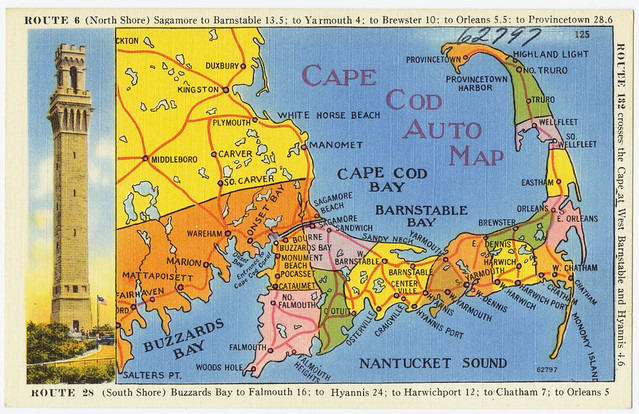
Cape Cod map post card circa 1930 ( The Mayflower Sales Co., Provincetown, Mass.
Tichnor Bros. Inc., Boston, Mass.)

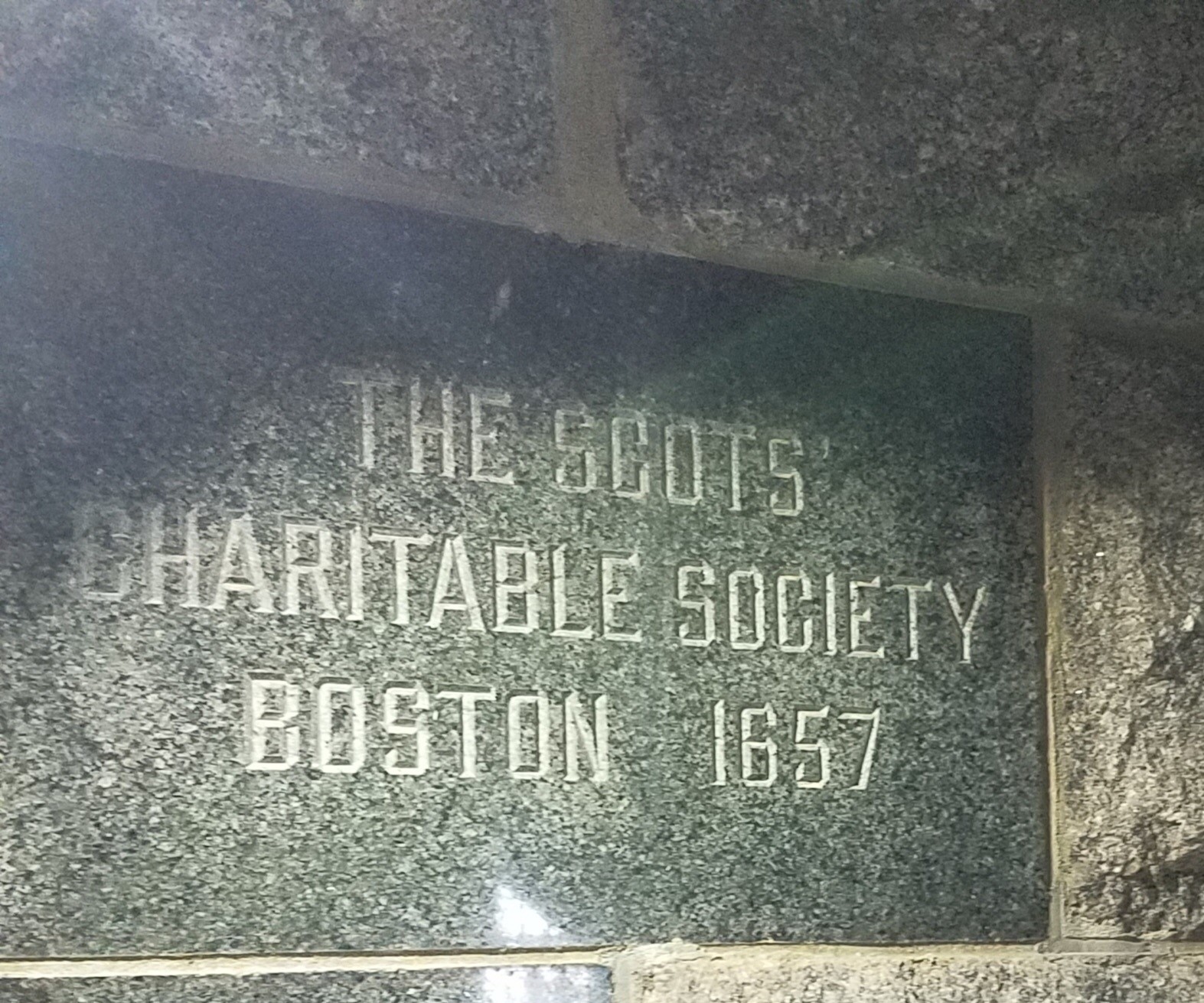
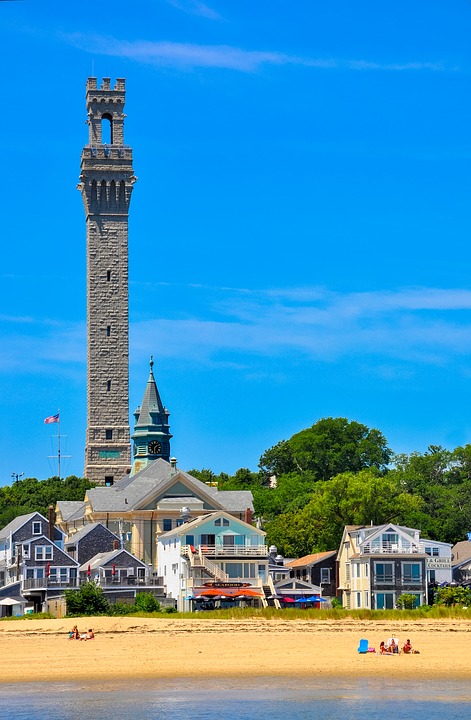
To commemorate their landing, an unmistakable structure dots the Provincetown skyline: the Pilgrim Monument. Within the 252-foot stone structure are memorial stones from the cities and towns representing settlements in the Plymouth and Massachusetts Bay Colonies, and from the three oldest chartered organizations in the state, including yours truly, The Scots Charitable Society. The cornerstone for this venerable tower was first laid by President Theodore Roosevelt in 1907, and was completed in 1910 with a dedication led by President William Howard Taft.

Photo courtesy of Dennis Napier

If you are in the area, check out the view from the top and don’t forget to stop by The Scots Charitable stone on your way up!  To read more about the history of The Pilgrim Monument, visit their website at https://www.pilgrim-monument.org/.

Photo courtesy of Mark Martins